


Seborrhoeic Keratosis
Safe, Professional Seborrhoeic Keratosis Removal Using Advanced Electrolysis
Seborrhoeic keratoses are one of the most common benign skin lesions we see at Jems Health & Beauty. They often appear as raised, rough or waxy growths and are frequently mistaken for moles, warts or even skin cancer.
Although they are harmless, many people choose to have them removed because they catch on clothing, become irritated, itch or simply affect their confidence.
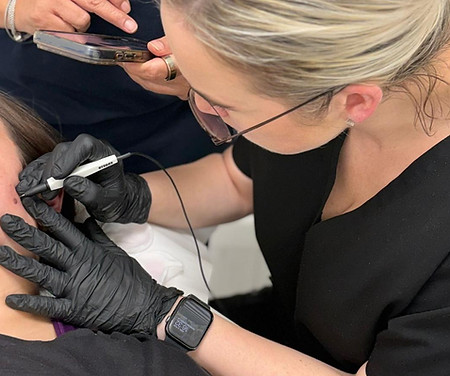
At Jems Health & Beauty in Whitefield, Manchester, we provide professional seborrhoeic keratosis removal using Advanced Electrolysis. Every treatment begins with a thorough consultation to ensure the lesion is suitable for cosmetic treatment and to discuss the results you can realistically expect.
If we’re ever unsure about a lesion, we won’t treat it. Your safety always comes first.

What Is a Seborrhoeic Keratosis?
A seborrhoeic keratosis (often shortened to Seb K) is a harmless, non-cancerous skin growth.
They usually appear as:
-
Brown, tan or black.
-
Slightly raised.
-
Rough or waxy.
-
As though they have been “stuck onto” the skin.
Some remain small, while others gradually become thicker and larger over time.
They are extremely common and become more frequent as we get older.

What Does a Seborrhoeic Keratosis Look Like?
Seborrhoeic keratoses have a very distinctive appearance once you know what you’re looking for.
Clients often describe them as:
-
“It looks like it’s stuck onto my skin.”
-
“It looks like a raisin.”
-
“It feels rough and crusty.”
-
“It looks like a little flake of cereal stuck to my skin.”
-
“It started as a small brown patch but has gradually become raised.”
-
“It catches when I dry myself with a towel.”
They can vary in colour from light tan to dark brown or almost black and may have a waxy, rough or slightly crumbly surface. Some remain quite flat, while others become thicker and more raised over time.
Although seborrhoeic keratoses have a very characteristic appearance, not every raised brown lesion is a seborrhoeic keratosis.
During your consultation we’ll carefully examine the lesion to confirm exactly what it is before recommending treatment. If we’re ever unsure, we won’t proceed with cosmetic removal. We may recommend our Map My Mole service or advise you to see your GP first, as your safety will always be our priority.
What Causes Seborrhoeic Keratoses?
The exact cause isn’t fully understood.
However, they are strongly associated with:
-
Ageing.
-
Genetics.
-
Natural changes within the skin.
Unlike age spots, they are not caused by sun exposure, although they often appear in areas that have seen years of sunlight. Importantly, seborrhoeic keratoses are not contagious and cannot be passed from person to person.
Where Do They Appear?
Seborrhoeic keratoses most commonly develop on:
-
Face.
-
Chest.
-
Back.
-
Shoulders.
-
Neck.
-
Abdomen.
They can occur almost anywhere on the body, although they do not usually develop on the palms of the hands or soles of the feet.
Are Seborrhoeic Keratoses Dangerous?
No. Seborrhoeic keratoses are benign skin growths.
However, because they can sometimes resemble moles or other pigmented lesions, it’s important that they are assessed correctly before cosmetic treatment.
If a lesion has recently changed, has irregular borders, unusual colouring or causes concern during your consultation, we won’t proceed with treatment until we are confident it is appropriate.
Is It Definitely a Seborrhoeic Keratosis?
One of the most important parts of your consultation is making sure we’re treating the correct lesion.
Not every raised brown lesion is a seborrhoeic keratosis.
Sometimes similar-looking lesions include:
-
Moles.
-
Warts.
-
Pigmented skin lesions requiring further assessment.
We’ll examine:
-
The colour.
-
The borders.
-
The texture.
-
Whether it is raised or flat.
-
How long it has been present.
-
Whether it has changed.
If we’re ever unsure, we’ll recommend our Map My Mole service or advise you to see your GP before cosmetic treatment.
How Does Advanced Electrolysis Remove Seborrhoeic Keratoses?
Advanced Electrolysis uses a very fine sterile probe to deliver a carefully controlled electrical current into the lesion.
The treatment gradually breaks down the unwanted tissue while preserving the surrounding healthy skin.
The exact technique depends on the size, thickness and location of the seborrhoeic keratosis.


What Happens During My Consultation?
We’ll carefully assess the lesion before discussing treatment.
We’ll explain:
-
Whether it is suitable for Advanced Electrolysis.
-
What results you can realistically expect.
-
Whether more than one treatment may be required.
-
Healing time.
-
Aftercare.
You’ll have plenty of opportunity to ask questions before deciding whether to proceed.
Does Seborrhoeic Keratosis Removal Hurt?
Most clients describe the treatment as very manageable. You’ll usually feel a brief warm or stinging sensation during treatment.
The exact level of discomfort depends on the size and thickness of the lesion, together with your own individual sensitivity. Because treatment is very precise, discomfort is generally short-lived.

Will It Be Gone Straight Away?
Smaller seborrhoeic keratoses often respond after one treatment.
Larger or thicker lesions may require additional treatments to achieve the best cosmetic outcome.
We’ll discuss this honestly during your consultation.

What Will It Look Like Afterwards?
Immediately after treatment you may notice:
-
Mild redness.
-
A darker appearance.
-
A small protective crust.
-
This is completely normal.
The treated area should be allowed to heal naturally without picking.
How Long Does Healing Take?
Healing depends on:
-
The size of the lesion.
-
The thickness.
-
The area treated.
-
Your individual healing response.
Most areas heal over the following few weeks. We’ll explain exactly what to expect before you leave.
Aftercare
To encourage the best possible healing we recommend:
-
Keeping the area clean and dry.
-
Avoiding picking the treated area.
-
Avoiding excessive heat for the first 24–48 hours.
-
Wearing SPF on exposed areas once healed.
-
Following your personalised aftercare advice.
The better you care for the treated area, the better your final cosmetic result is likely to be.
Can Seborrhoeic Keratoses Come Back?
Once a treated seborrhoeic keratosis has been successfully removed, that particular lesion is unlikely to return.
However, because they develop naturally with age, new seborrhoeic keratoses may appear elsewhere over time.
Common Myths about Seborrhoeic Keratoses
Myth:
They’re just old age warts.
Fact:
Although common with age, they are not viral warts.
Myth:
They’re contagious.
Fact:
They cannot be passed to other people.
Myth:
They’re skin cancer.
Fact:
Seborrhoeic keratoses are benign, although some skin cancers can resemble them, which is why professional assessment is essential.
Myth:
You can simply scrape them off yourself.
Fact:
Attempting to remove them at home can lead to infection, bleeding and scarring.
Why Choose Jems Health & Beauty?
Every lesion deserves careful assessment before treatment.
When you choose Jems you’ll receive:
-
A thorough consultation.
-
Honest advice.
-
Advanced Electrolysis performed with precision.
-
Personalised aftercare.
-
Access to our Map My Mole service if further assessment is appropriate.
-
Treatment in an experienced clinic established in 2008.
Your safety will always come before cosmetic treatment.

Questions Clients Ask Every Day
Can I go to the gym afterwards?
We recommend avoiding strenuous exercise and excessive sweating for the first 24–48 hours.
Can I shower afterwards?
Yes. Try to keep the treated area as dry as possible during the first 24–48 hours. Avoid heavily perfumed soaps and shower gels directly on the area and gently pat the skin dry.
Can I have a glass of wine afterwards?
Where possible, avoid alcohol for 24 hours before and after treatment as it may increase redness and make the treated area more reactive.
Will I have a scab?
Yes. A small dry crust usually develops and should be left to heal naturally.
Why has it gone darker after treatment?
This is completely normal and forms part of the healing process before the lesion gradually separates from the skin.
Can they itch?
Yes. Seborrhoeic keratoses can become itchy or irritated, particularly if they rub on clothing or jewellery.
Can they catch on clothing?
Yes. This is one of the most common reasons clients choose to have them removed. They often catch on bras, waistbands, shirt collars, necklaces or while shaving, making them uncomfortable in everyday life.
Can they bleed?
Yes. If they become caught or irritated they may bleed, which is another reason many people seek treatment.
Can they become cancerous?
Seborrhoeic keratoses themselves are benign. However, if we’re ever unsure about a lesion, we’ll always recommend further assessment before treatment.
Can I have more than one treated?
Yes. Depending on their size, number and location, we can often treat several lesions during the same appointment.
Jodie’s Advice
"One of the most common things I hear is, ‘I thought it was just an old age wart.’ In reality, seborrhoeic keratoses are incredibly common and completely harmless, but that doesn’t mean you have to live with them if they bother you.
The first thing I’ll always say is, ‘Let’s have a look.’ Not every raised brown lesion is a seborrhoeic keratosis, so it’s important we identify exactly what we’re treating.
If I’m ever unsure, I won’t remove it. Your safety comes first, and if I feel a lesion would benefit from further assessment, I’ll recommend our Map My Mole service or advise you to see your GP.”

Still Not Sure?
If you’ve noticed a raised, rough or waxy skin lesion and you’re unsure what it is, book a consultation.
We’ll assess the area carefully, explain exactly what we believe it is and recommend the safest and most appropriate treatment for you.
Ready to Remove Your Seborrhoeic Keratosis?
If you’d like professional advice about seborrhoeic keratosis removal, we’d be delighted to help.
Book a consultation with Jems Health & Beauty in Whitefield, Manchester, where we’ll assess your skin, answer your questions and recommend the most appropriate treatment plan.


